
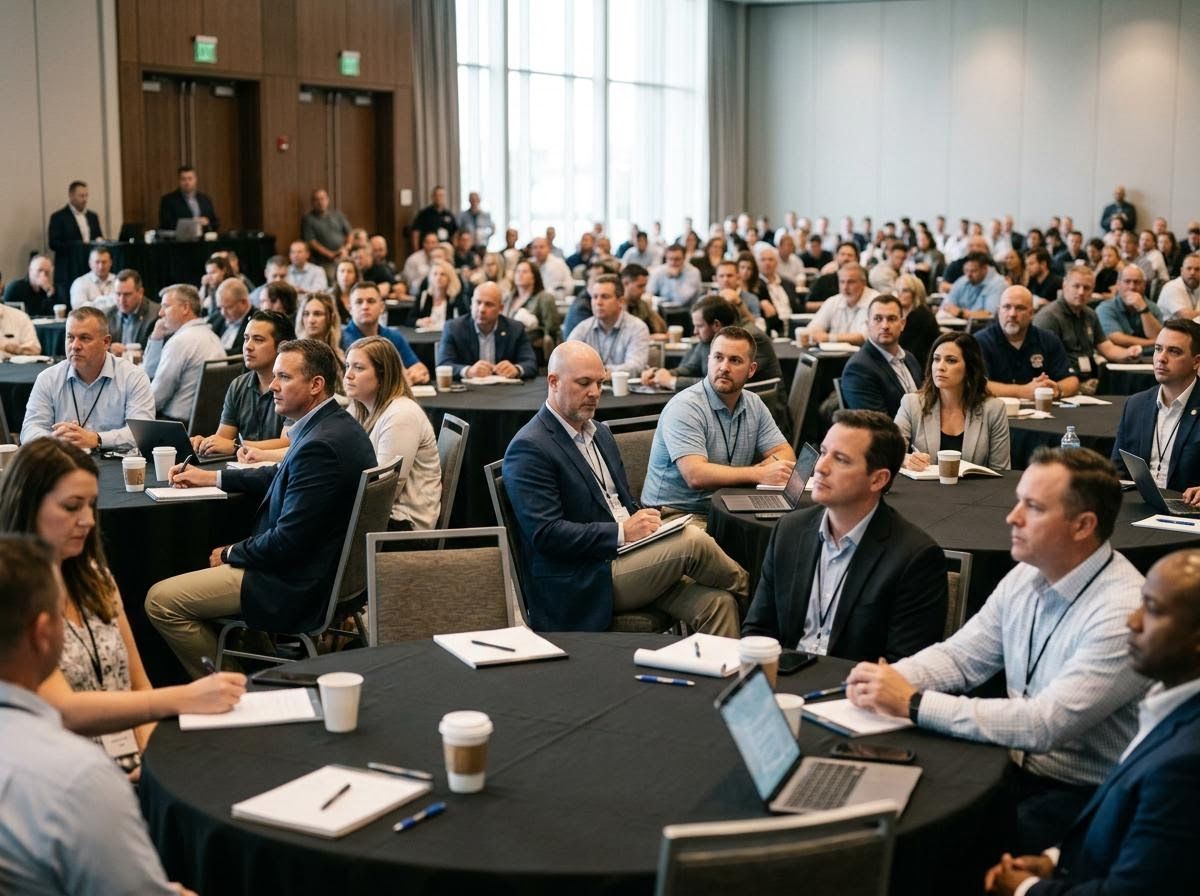
Texas private investigator training is drawing its biggest crowd on record this week. The Texas Association of Licensed Investigators (TALI) holds its 2026 annual conference, themed “Technology Driven Investigations,” September 24-26 in San Antonio, and organizers report it sold out faster than any conference in the association's history. For a profession that operates largely outside the public eye, the sell-out says something worth paying attention to: licensed investigators across Texas are actively retooling around AI, digital forensics, and financial-crime tracing, and the specific skills on the agenda line up closely with what attorneys, SIU teams, and corporate risk clients actually need from the investigators they hire.
A Record Turnout for Technology-Driven Investigations
TALI is the statewide professional association for licensed private investigators in Texas, and its annual conference is the industry's largest in-state gathering. This year's program runs three days at The Monarch San Antonio, with more than 15 sessions, 15 speakers, and up to 22 hours of continuing-education credit on offer, alongside a vendor and exhibitor hall drawing sponsors from insurance, data, and investigative-technology firms. A separate pre-conference program, TILT (Texas Investigator Launch Training), gives newly licensed investigators — those with fewer than three years in the field — a full day of “PI 101” instruction covering business fundamentals, Texas-specific laws, ethics, and report writing before the main conference begins. A concurrent masterclass on building a profitable, ethical investigations firm rounds out the pre-conference day, underscoring that TALI treats business literacy as inseparable from investigative skill. The speaker lineup draws from private industry, federal and international law enforcement backgrounds, and specialty digital-forensics firms, reflecting how broad the skill set for modern investigative work has become.
What the Session Lineup Says About Where the Profession Is Headed
The conference agenda doubles as a fairly precise map of where client demand is pulling the profession. Sessions on applying AI to real investigative workflows, open-source intelligence (OSINT) techniques for locating people and patterns, and detecting evidence concealed in “decoy” or vault smartphone apps all point toward digital tradecraft becoming a baseline skill rather than a specialty. A session on Event Data Recorder (EDR) investigations walks through how vehicle-generated data can be preserved and used in claims and litigation — directly relevant to attorneys and adjusters building a case around a collision or fraud claim. Another session focuses specifically on crypto scams and asset laundering, teaching investigators how illicit funds move through peel chains, mixers, and decentralized-finance protocols, citing FBI figures showing crypto-fraud losses topped $11 billion in 2025 alone — a skill set that maps directly onto the kind of financial-crime referrals SIU teams increasingly need help with. Rounding out the technical track, sessions on forensic investigative genetic genealogy, the legal boundaries around investigative photography, and technical surveillance countermeasures (TSCM) show the profession's reach extending from cold-case identification work to corporate counter- surveillance sweeps.
A Liability Conversation Attorneys and Corporate Clients Should Be Having Too
Not every session is about new investigative capability — one of the more consequential ones for Reveles audience concerns risk. A presentation from the president of OREP, a national liability insurer for private investigators, walks investigators through real claim histories and warns that some carriers are now quietly filing new AI-related exclusions on errors-and-omissions and umbrella policies. That is a detail worth flagging for any attorney, SIU team, or corporate client that retains outside investigators: as AI tools become part of routine investigative workflow, it is reasonable to ask a vendor firm whether its current E&O coverage actually extends to AI-assisted work product, rather than assuming a policy purchased a few years ago still fits how the work gets done today. A separate session on the conference's second day covers Texas Private Security Board rules and pending legislative changes, a reminder that the state's licensing framework for investigators continues to evolve and is worth tracking independent of any single case. Taken together, the risk-focused sessions suggest the association itself sees compliance and coverage, not just tradecraft, as central to where the profession needs to mature next.
Why a Sold-Out Conference Is a Useful Signal for Buyers of Investigative Services
None of this requires attending the conference to be useful. For a firm or legal team evaluating investigative partners in Texas, the session list is a reasonably reliable proxy for what a well-run, actively engaged investigative firm should already be capable of in 2026: comfort with AI-assisted research, working knowledge of OSINT methodology, the ability to handle digital and vehicle-data evidence without losing chain of custody, and financial-crime tracing skills that used to sit exclusively with forensic accountants. A firm whose investigators are current on this material — whether or not they attended this particular event — is better positioned to support litigation, SIU referrals, and corporate due diligence than one relying solely on traditional surveillance methods.
WHY IT MATTERS
For attorneys and SIU teams, the practical takeaway is twofold. First, when selecting or continuing to work with a Texas investigative firm, ask directly about experience with EDR vehicle-data recovery and crypto- asset tracing — both are increasingly relevant to litigation support and fraud referrals, and both were treated as core skills at this year's conference rather than niche add-ons. Second, when vetting a PI firm's insurance coverage as part of vendor due diligence, confirm that its errors-and-omissions policy has been reviewed for the new AI-related exclusions carriers are beginning to file, rather than assuming older coverage automatically extends to AI-assisted work product.